

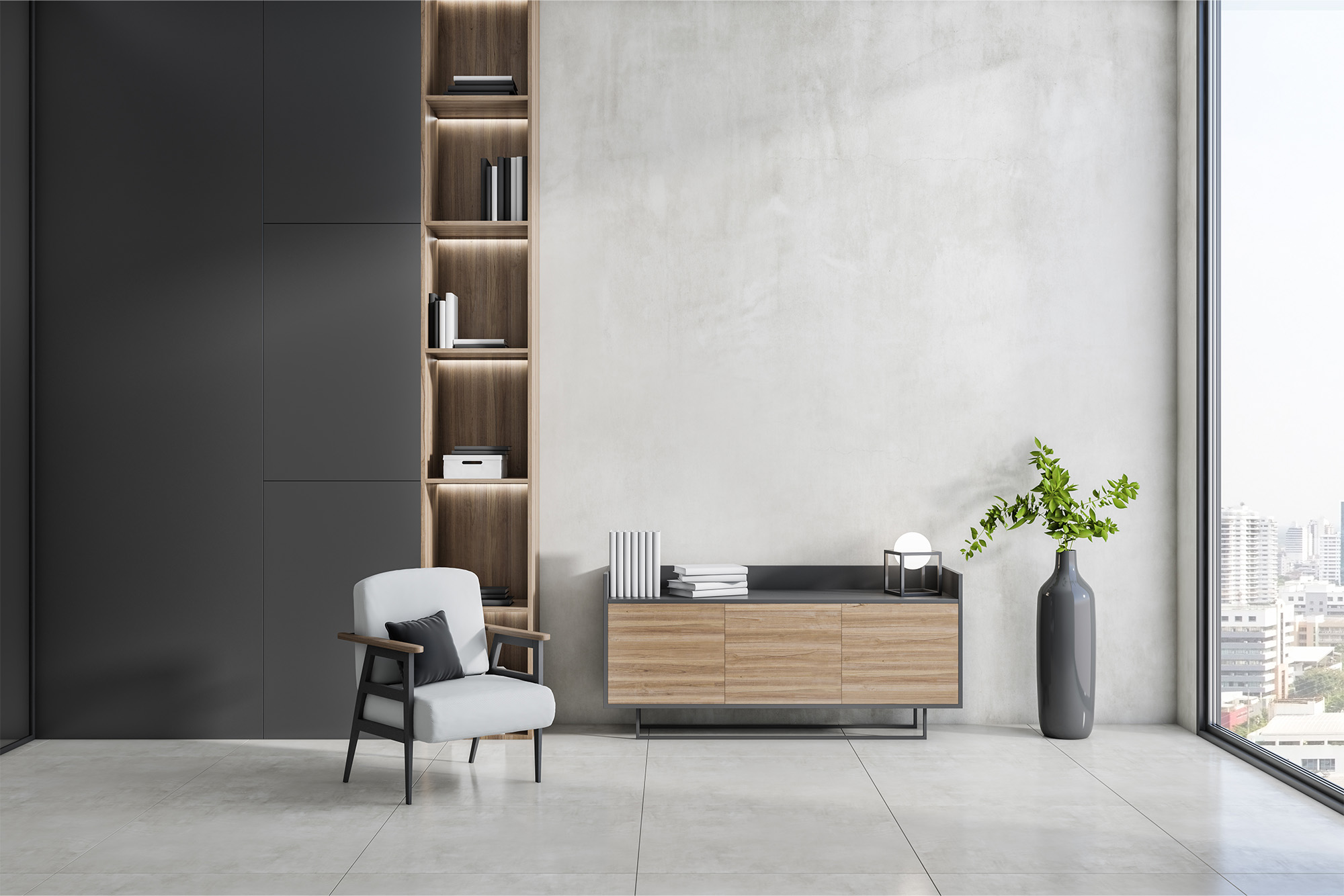
The size of your tile can change the entire feel of a room. Standard tile creates a familiar grid with more visible grout lines, while large-format tile can make a floor or wall feel broader, cleaner, and more continuous.
Neither option is automatically better. The right choice depends on the size of your space, the look you want, maintenance preferences, and how much installation preparation your project requires.
What Makes Large-Format Tile Different?
Large-format tile is generally considered tile with at least one edge measuring 15 inches or more, although today's selections extend far beyond that size. Options can include 12-by-24-inch layouts, 24-by-48-inch tile, and even larger slab-style formats.
Standard tile gives you more individual pieces to work with. That can be useful when your room has multiple corners, narrow sections, or complicated transitions because smaller tiles can be easier to cut and arrange. Large-format tile covers more surface with each piece, which means fewer grout joints. That difference can have a major visual impact.
The Case for Large-Format Tile
One of the biggest advantages is the clean appearance. Fewer grout lines create less visual interruption, allowing the color, texture, or veining of the tile to stand out. The result can make a room feel more open, particularly when the same large-format tile continues across a spacious floor. Large tiles can also reduce the amount of grout that needs regular cleaning.
Large-format tile works particularly well with contemporary designs, but it is not limited to modern homes. Wood-look porcelain, natural-stone-inspired patterns, concrete looks, and traditional finishes are available in larger dimensions, giving you plenty of flexibility.
There is also a practical benefit. Fewer grout joints mean fewer narrow channels where dirt can collect. The tile surface itself is generally straightforward to clean, making the finished floor appealing for busy households.
Where Standard Tile Has an Advantage
Standard tile should not be dismissed simply because larger formats are trending. Smaller tile sizes give you more layout flexibility. They can work well in compact spaces, rooms with unusual dimensions, and areas where detailed patterns are part of the design. A traditional grid can also provide a classic look that complements a wide range of interiors.
Smaller pieces are generally easier to handle and cut, which can make complicated layouts less demanding than working with oversized material. Grout also becomes part of the design. Instead of trying to minimize grout lines, you can use grout color to emphasize the pattern or create contrast. So if you prefer a classic checkerboard, decorative layout, or more detailed visual pattern, standard tile may actually give you more creative freedom.
Large-Format Tile Requires Better Installation Preparation
This is one of the most important differences to understand before choosing large-format tile. Bigger tiles are less forgiving when the surface underneath them is uneven. A small dip or high spot in the substrate can become much more noticeable when a large tile spans across it. Installation guidance for large-format tile emphasizes proper substrate preparation, mortar coverage, handling, and techniques designed to reduce lippage and installation problems.
That means fewer tiles does not necessarily mean an easier tile installation. Large pieces can be heavier and more difficult to maneuver. Cutting around cabinets, doorways, plumbing, corners, and other obstacles can require careful planning. Your installer also needs to consider the appropriate setting materials and coverage for the specific tile. For a homeowner, this is a good reason to think about tile installation as part of the tile-selection decision, rather than choosing a size based only on appearance.
Which Tile Makes More Sense for Your Home?
Start with the room. For a large, open living area, large-format tile can create a calm, expansive surface with fewer grout lines. In a smaller bathroom or a room with many corners and penetrations, standard tile may make layout and installation more manageable.
Your home's existing style matters as well. Large-format tile can complement open floor plans and contemporary interiors, while standard formats can work beautifully with traditional or transitional designs.
Local conditions are worth considering, too. Lexington and surrounding West Tennessee experience warm, humid summers and significant rainfall throughout the year. In spaces where moisture and tracked-in dirt are concerns, tile can be an appealing flooring choice, but proper installation and maintenance remain essential.
See the Difference Before Choosing Your Tile
Choosing between large-format tile and standard tile is easier when you can see the actual sizes, textures, grout combinations, and patterns together. Feel Good Floors can help you compare your options and think through how each format will work in your home.
Visit our showroom to explore tile flooring in person and discuss your project with a flooring professional. Contact us today for help choosing the right tile flooring and tile installation approach for your home in Lexington, TN and throughout Jackson, TN, Parsons, TN, Savannah, TN, Huntington, TN, and West Tennessee.