

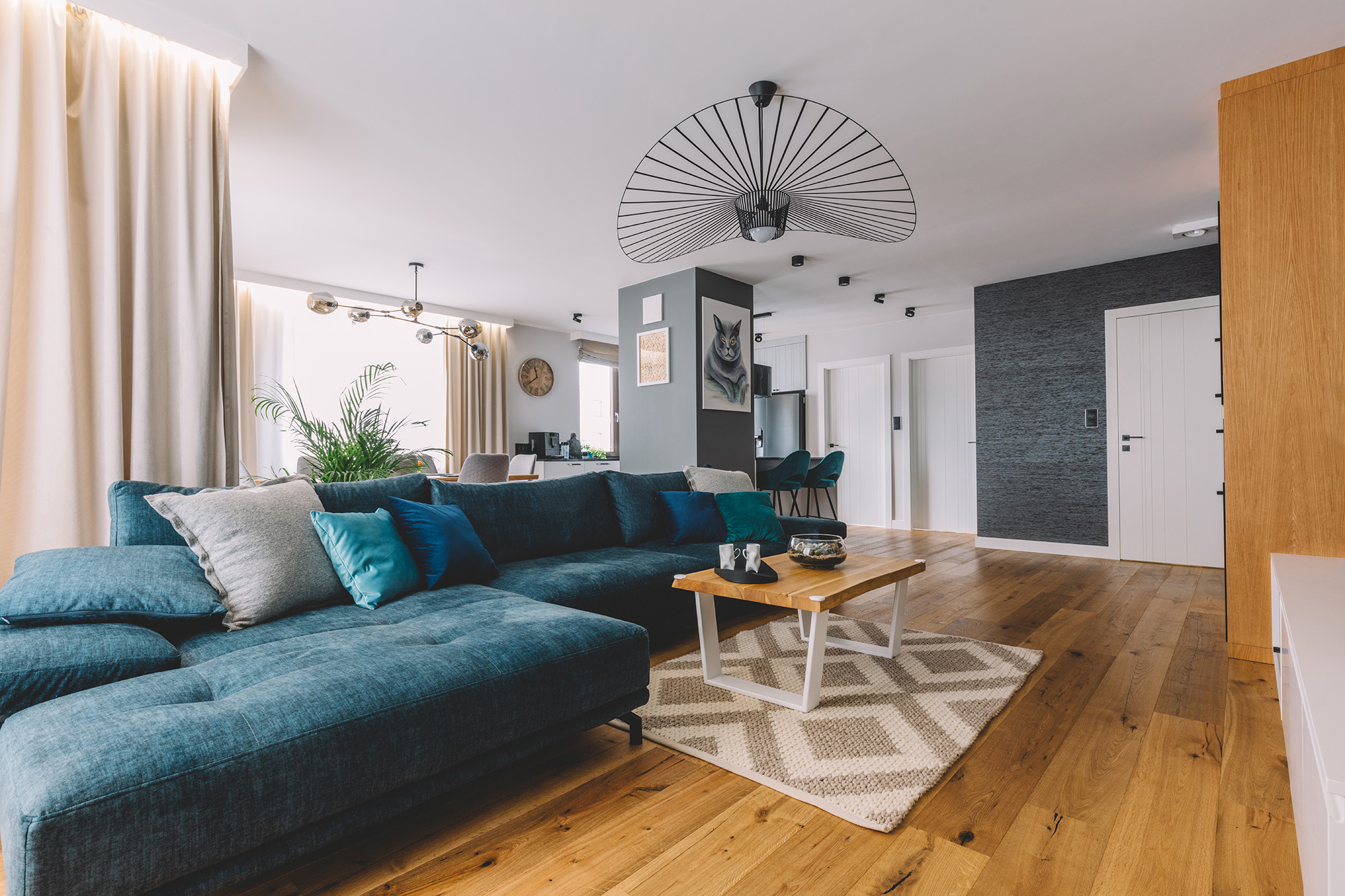
Hardwood flooring remains one of the most sought-after choices for homeowners who want a natural, long-lasting surface. But choosing hardwood is only the beginning. You also need to decide between solid and engineered construction, and that decision can affect where the flooring can be installed, how it responds to moisture, and how much flexibility you have with future refinishing. Both options can bring the warmth and character of real wood into your home. The better fit depends on your rooms, subfloor, lifestyle, and long-term plans.
How Solid Hardwood Flooring Is Constructed
Solid hardwood flooring is made from a single piece of wood. Each plank has wood throughout its thickness, which gives it a substantial feel and allows many solid hardwood floors to be sanded and refinished multiple times over their useful life.
That makes solid hardwood appealing if you are thinking about flooring as a long-term investment. Scratches, surface wear, and changing style preferences do not necessarily mean the floor needs to be replaced. Depending on the thickness and condition of the boards, refinishing can give an older floor a new appearance.
Solid hardwood also offers the natural variation that makes wood distinctive. Species, board width, grain, stain, and finish all influence the final look. The limitation is that solid wood is more sensitive to changes in moisture and humidity than engineered construction. It is generally best suited to appropriate above-grade areas where the installation environment can be properly controlled.
Why Engineered Hardwood Flooring Is Different
Engineered hardwood flooring has a real wood surface, but its construction uses multiple layers. The top layer is a hardwood veneer, while the underlying layers are designed to provide dimensional stability. This construction can make engineered hardwood more adaptable to areas where solid hardwood may be less suitable. It can often be installed in locations where a floating or glued installation is preferred, depending on the product.
Engineered wood also tends to respond more predictably to changes in humidity because of its layered construction. That does not make it immune to moisture problems, but it can make it a practical option for a wider range of rooms. The amount of future refinishing possible depends on the thickness of the real-wood wear layer. If refinishing is important to you, check the manufacturer's specifications before purchasing.
Think About Your Home Before Choosing
Your home's layout should influence the decision. If you want traditional solid wood throughout suitable areas and appreciate the possibility of multiple future refinishes, solid hardwood may be worth considering. If you want greater installation flexibility or are concerned about seasonal environmental changes, engineered hardwood may offer advantages. The subfloor matters as well.
Concrete, plywood, existing flooring, and other substrates can have different preparation and installation requirements. Your daily routine should also factor into the choice. Pets, children, heavy traffic, and exposure to tracked-in moisture can affect which wood species, finish, plank construction, and installation method make the most sense. Rather than choosing solely by appearance, consider how the flooring will perform in each room.
Hardwood Installation Is Part of the Decision
The installation method can be just as important as the material itself. Solid hardwood installation commonly involves fastening boards to an appropriate wood subfloor, while engineered products may offer additional installation options depending on the manufacturer's specifications. Before installation begins, the flooring and installation environment need to be evaluated. Moisture conditions, subfloor flatness, acclimation requirements, transitions, and expansion allowances can all affect the finished floor.
This is one reason professional installation can be valuable. A beautiful product can still perform poorly if the underlying conditions or installation method are not appropriate. If you are comparing solid hardwood flooring installation with engineered hardwood flooring installation, ask what your particular home requires rather than assuming one method is automatically better.
Choose the Hardwood That Fits Your Long-Term Plans
There is no universal answer for every homeowner. Solid hardwood can provide substantial material and long-term refinishing potential, while engineered hardwood can provide real-wood beauty with construction designed for greater dimensional stability and installation flexibility.
Feel Good Floors can help you compare wood species, finishes, plank styles, and construction options based on the rooms you want to update. Visit our showroom to see hardwood flooring in person and discuss which option fits your home. Contact us today to plan your project in Lexington, TN and throughout Jackson, TN, Parsons, TN, Savannah, TN, Huntington, TN, and West Tennessee.